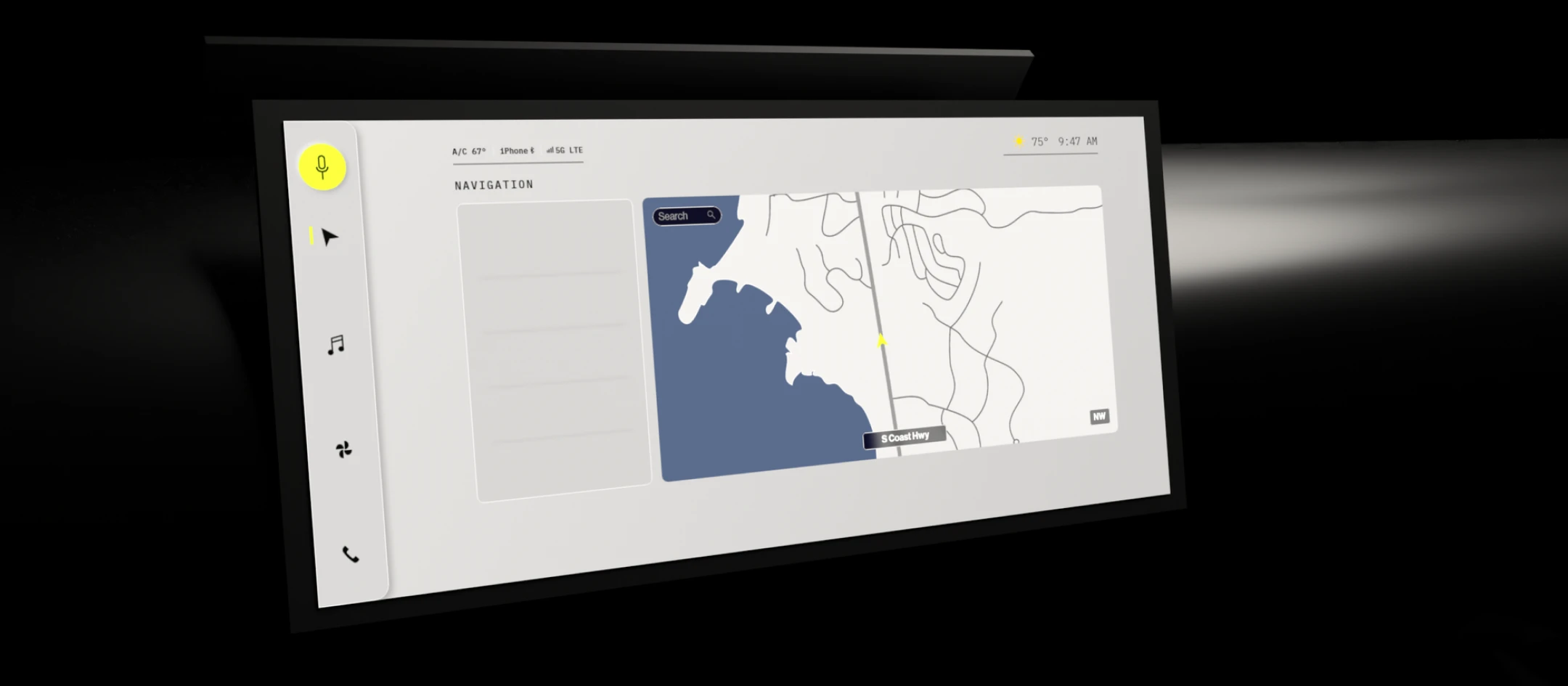
Cars have accrued a lot of functionality — and interaction has gotten confusing
In my opinion, interacting with a car has become a confusing experience. Which isn't something you want when driving. As screens become more common in vehicles, we run the risk of making it worse. My goals for this project were straightforward:
- Clean, intuitive UI — reduce the cognitive load of in-car interaction
- Explore car interactions — figure out what a better version actually looks like
Dials or touch? The answer turned out to be both.
One of the biggest challenges was figuring out how people prefer to interact with a car — and then deciding whether learned convention is worth keeping just because people are used to it. Ultimately I went with a hybrid of touch and physical controls. Volume and temperature by dial. GPS and navigation by touch only. The goal was to match interaction type to how much attention each task actually demands.
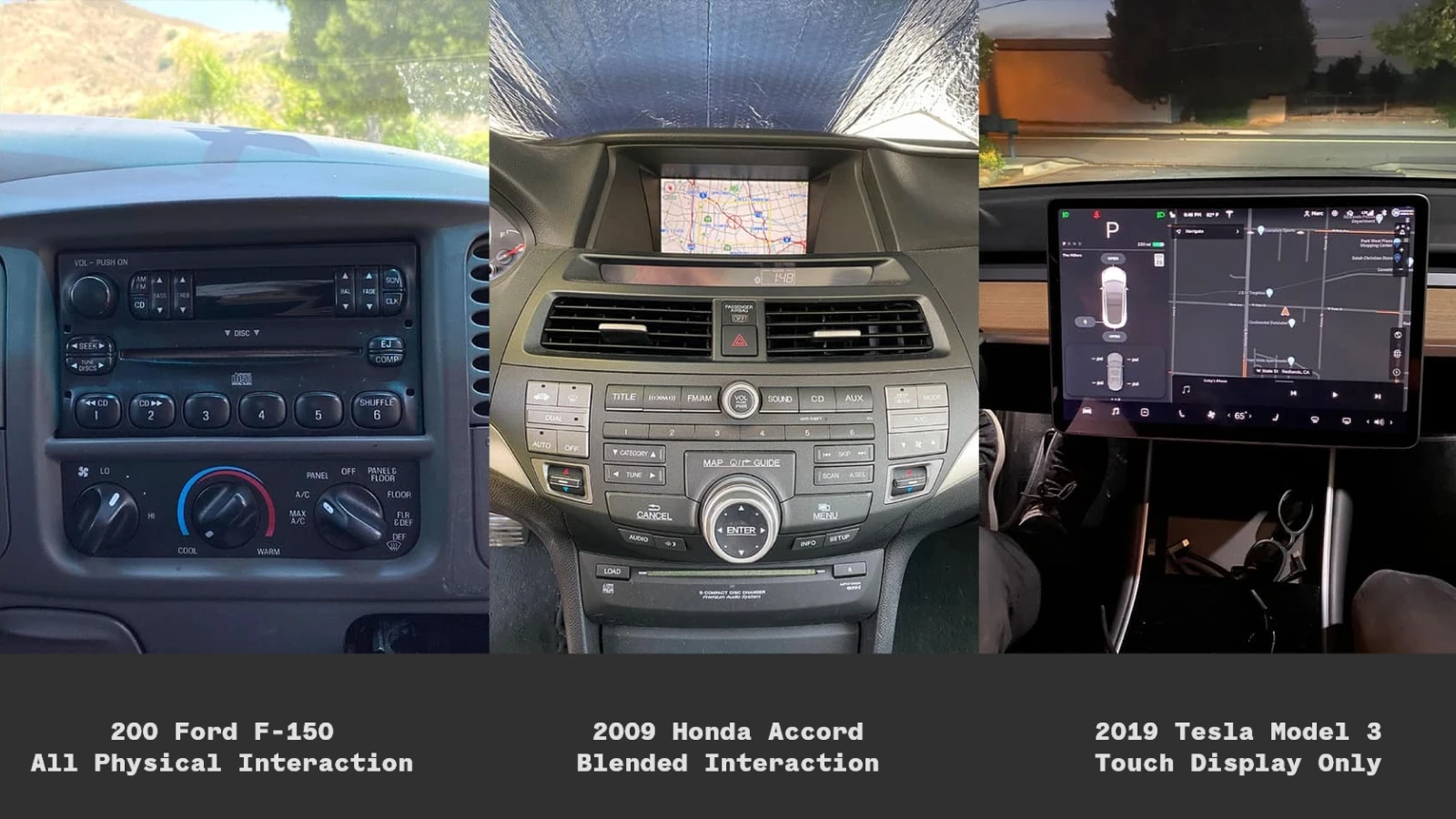
Exploring the dial vs touch decision — and why some things belong on each side.
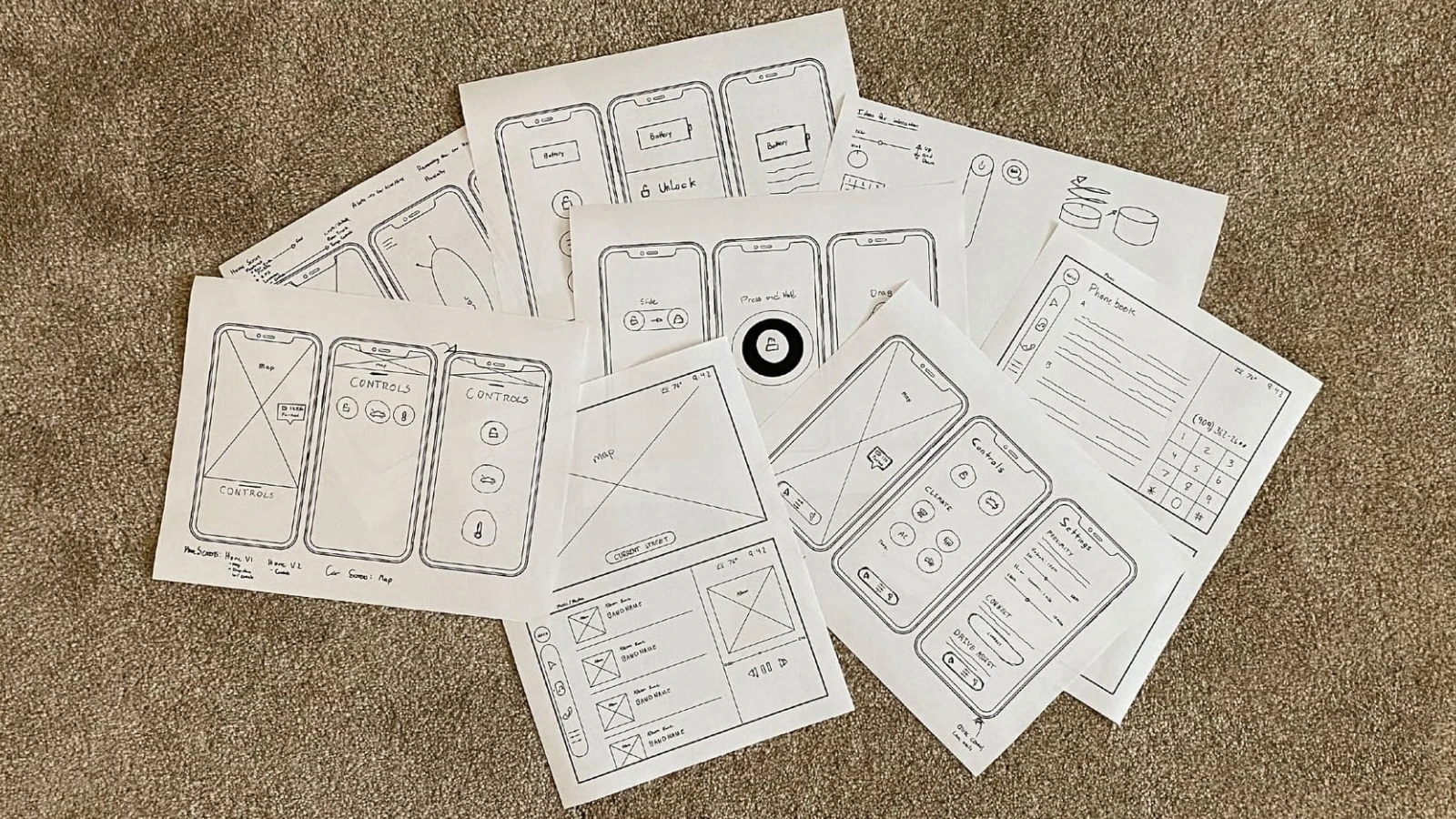
Early sketches — rapid ideation to get ideas on paper before committing to a direction.
Two rounds — users asked good questions I didn't have good answers to yet
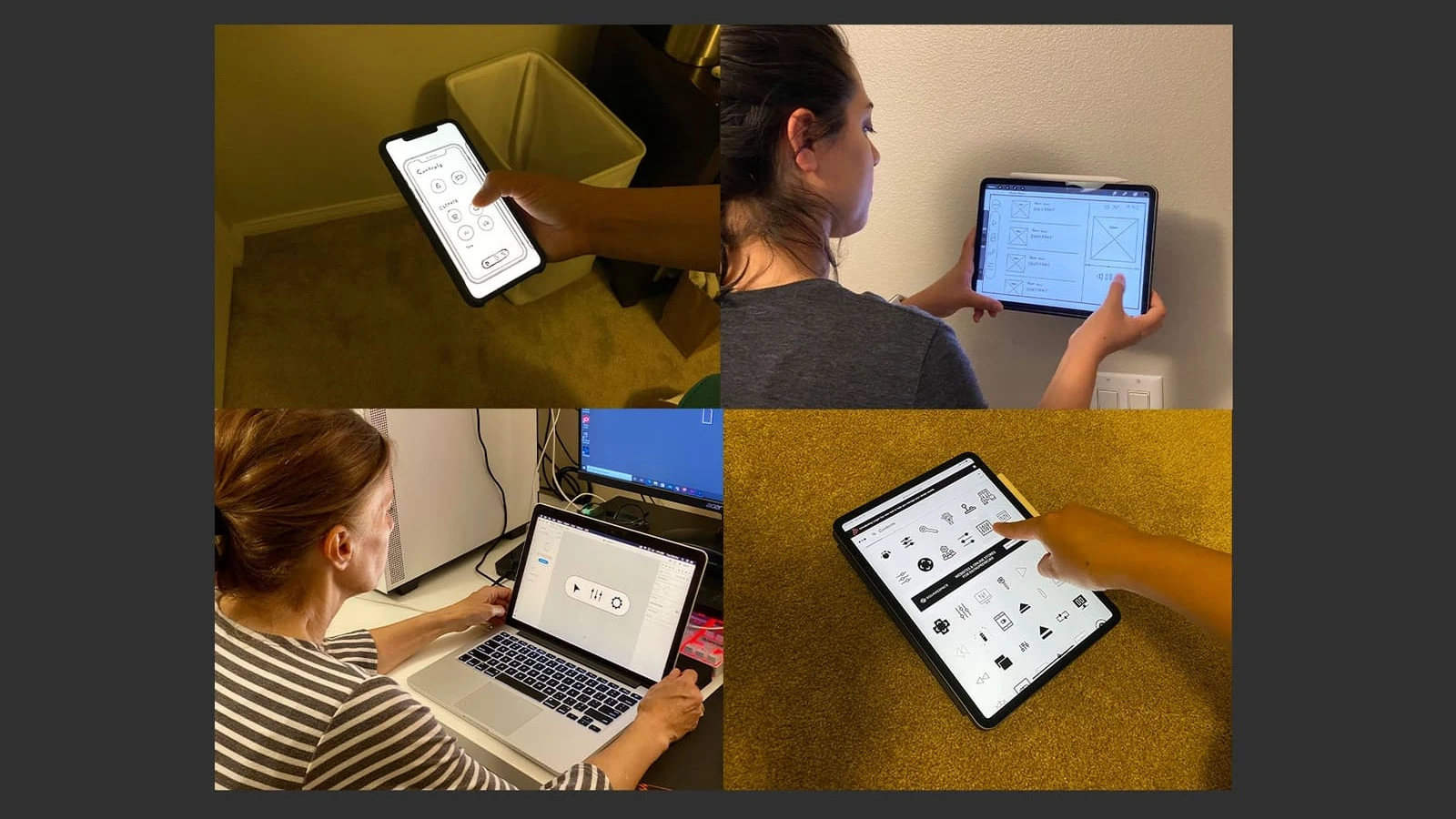
After completing the sketches I scanned and loaded them onto devices for the first round of testing with three people. I tested icon comprehension and gave users scenarios to work through — finding a car's location, skipping a song, turning on AC remotely.
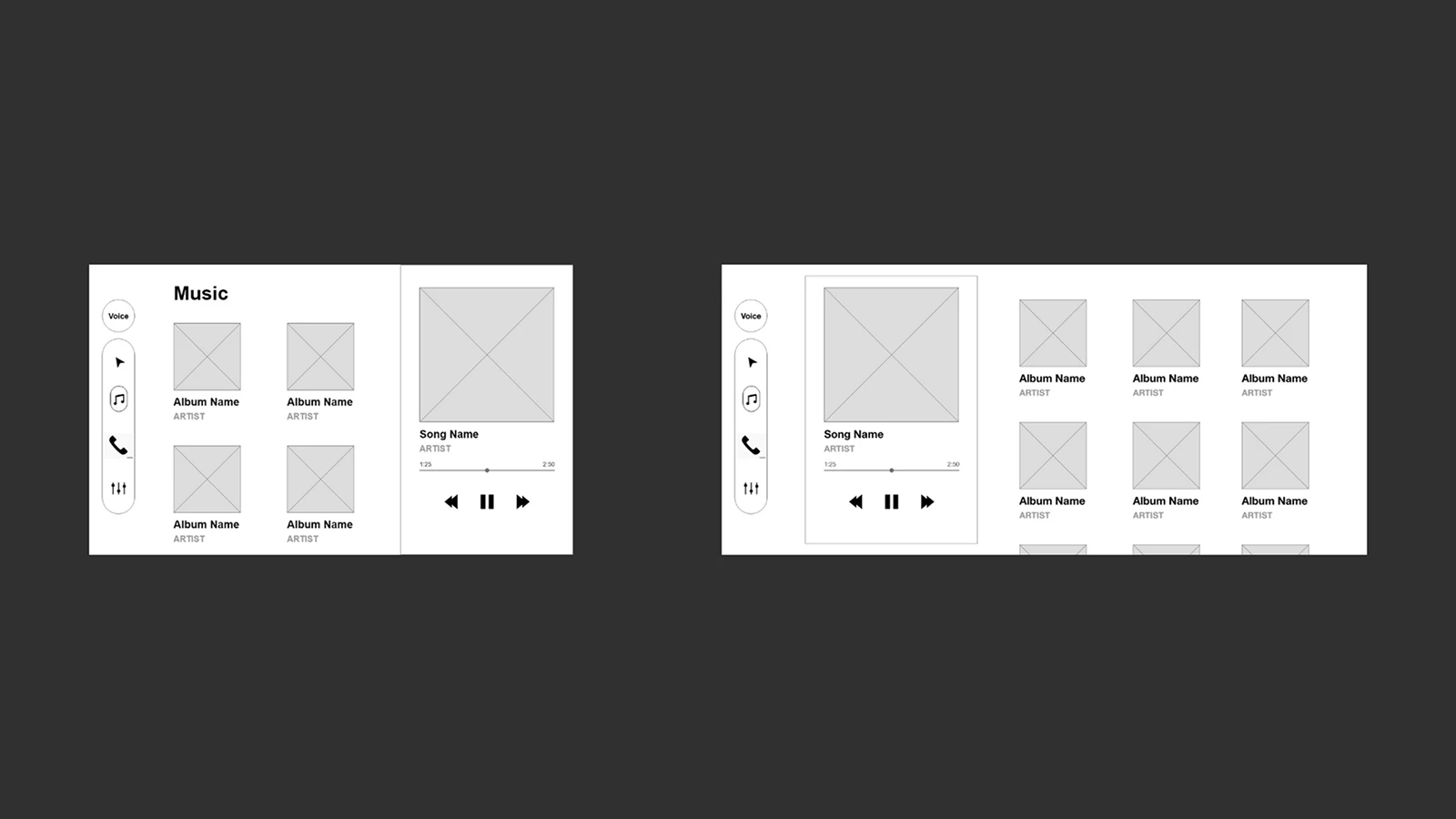
Round 1 wireframes tested in-context on device.
From those tests, users raised questions I didn't have good answers to: some pages were missing features (Climate vs. Controls), the screen size felt too small for the amount of information, and the phone interface didn't match the car interface. All legitimate. A big layout change was coming regardless — necessary to meet user needs.
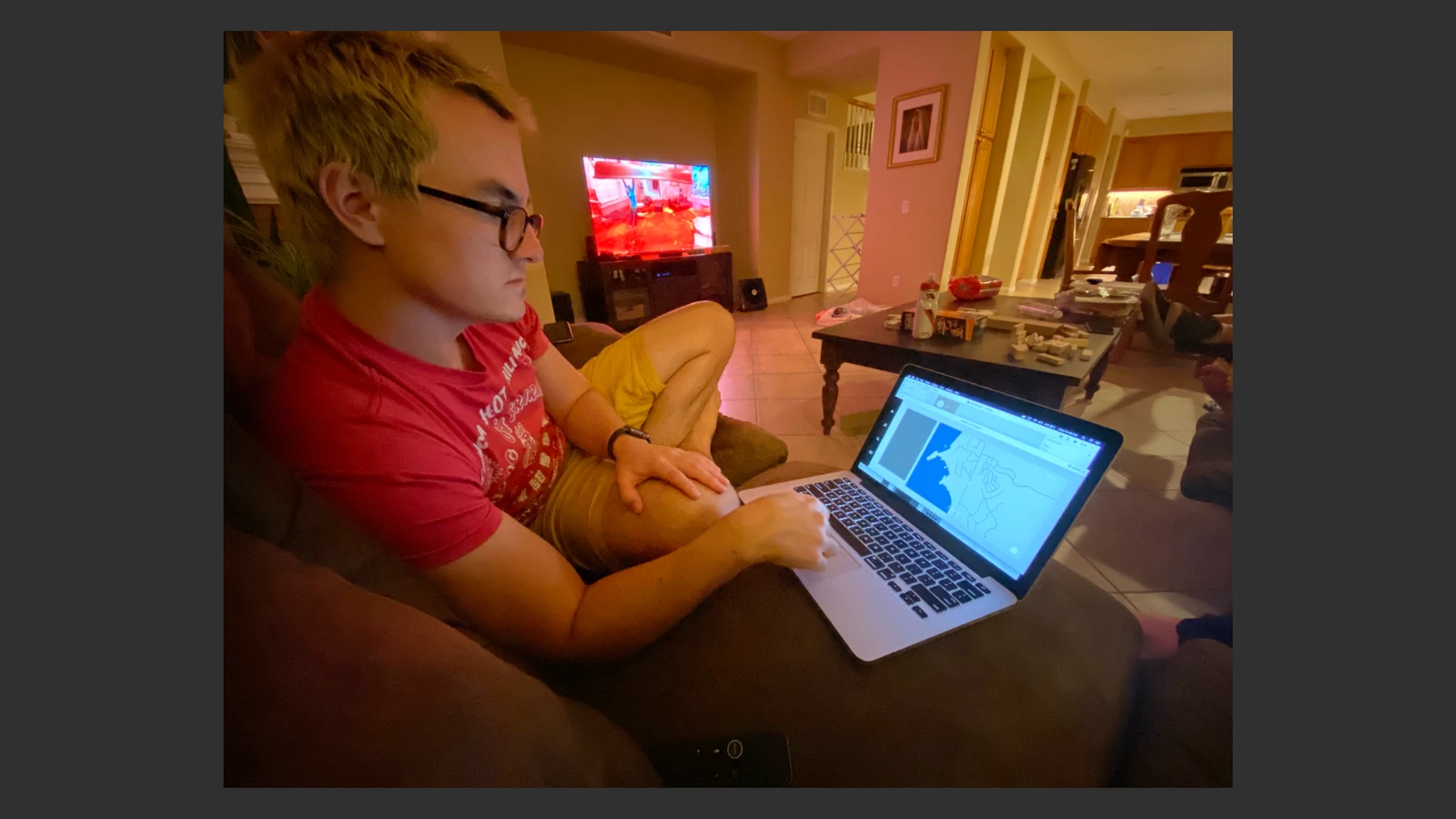
Round 1 in progress — the pattern of questions helped define exactly what needed fixing.
Round 2 was more focused. A pattern quickly developed around finding the car's charge level — users couldn't find it. I also got direct feedback on design inconsistency, which I addressed before final polish.
The neomorphic style — inspired by how light interacts with physical surfaces.
Neomorphic, light-driven, with physical elements designed to match
The design was inspired by light and how it interacts with our environment. I wanted to explore a more three-dimensional space as opposed to a flat design — so I used a neomorphic style throughout. For typography, IBM Plex Mono for most text, and Neue Haas Grotesk Display Pro for numbers and larger elements.
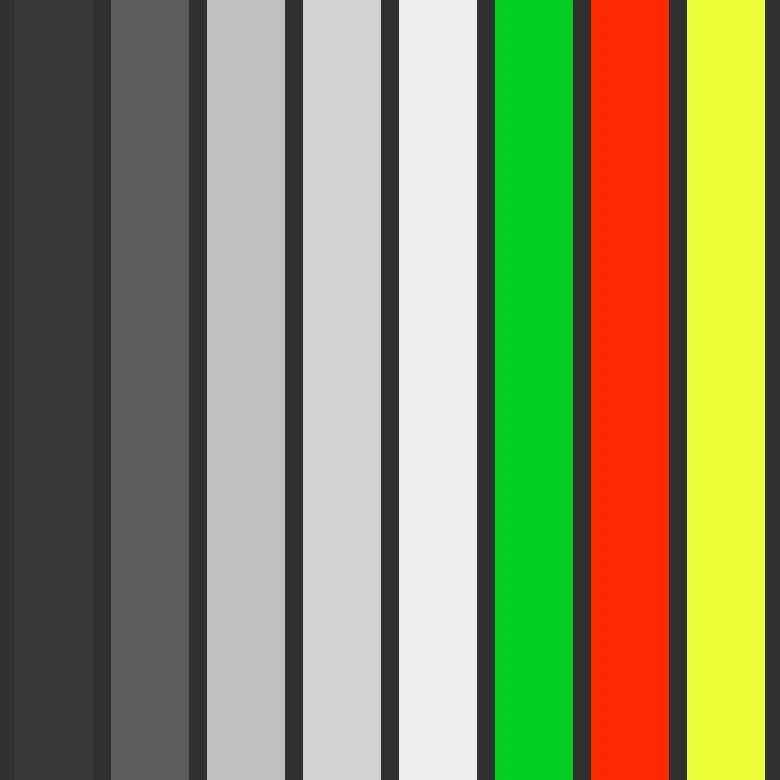
Mostly grey — because shadow is mostly grey. Secondary colors add life.
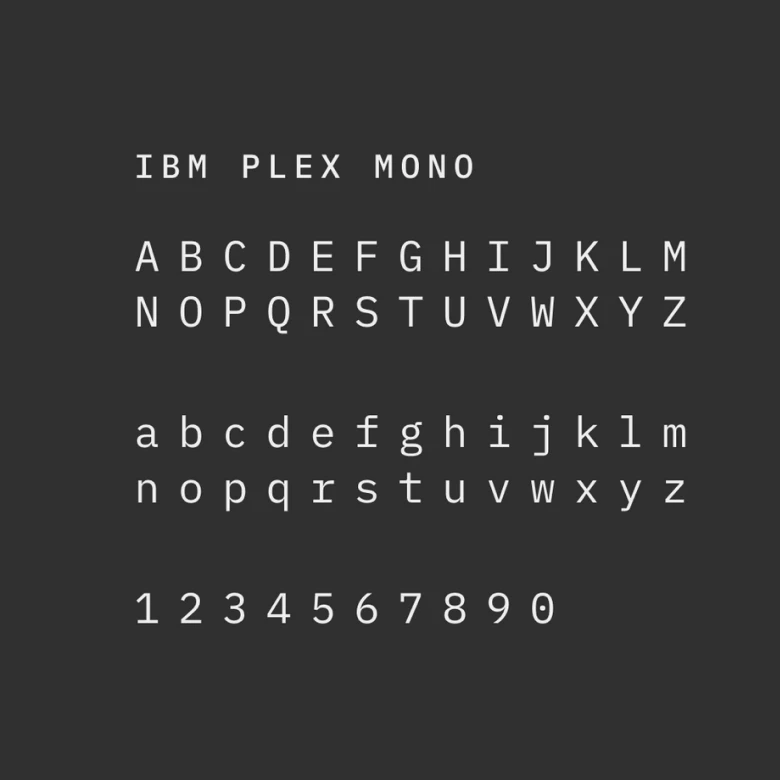
IBM Plex Mono and Neue Haas Grotesk Display Pro.
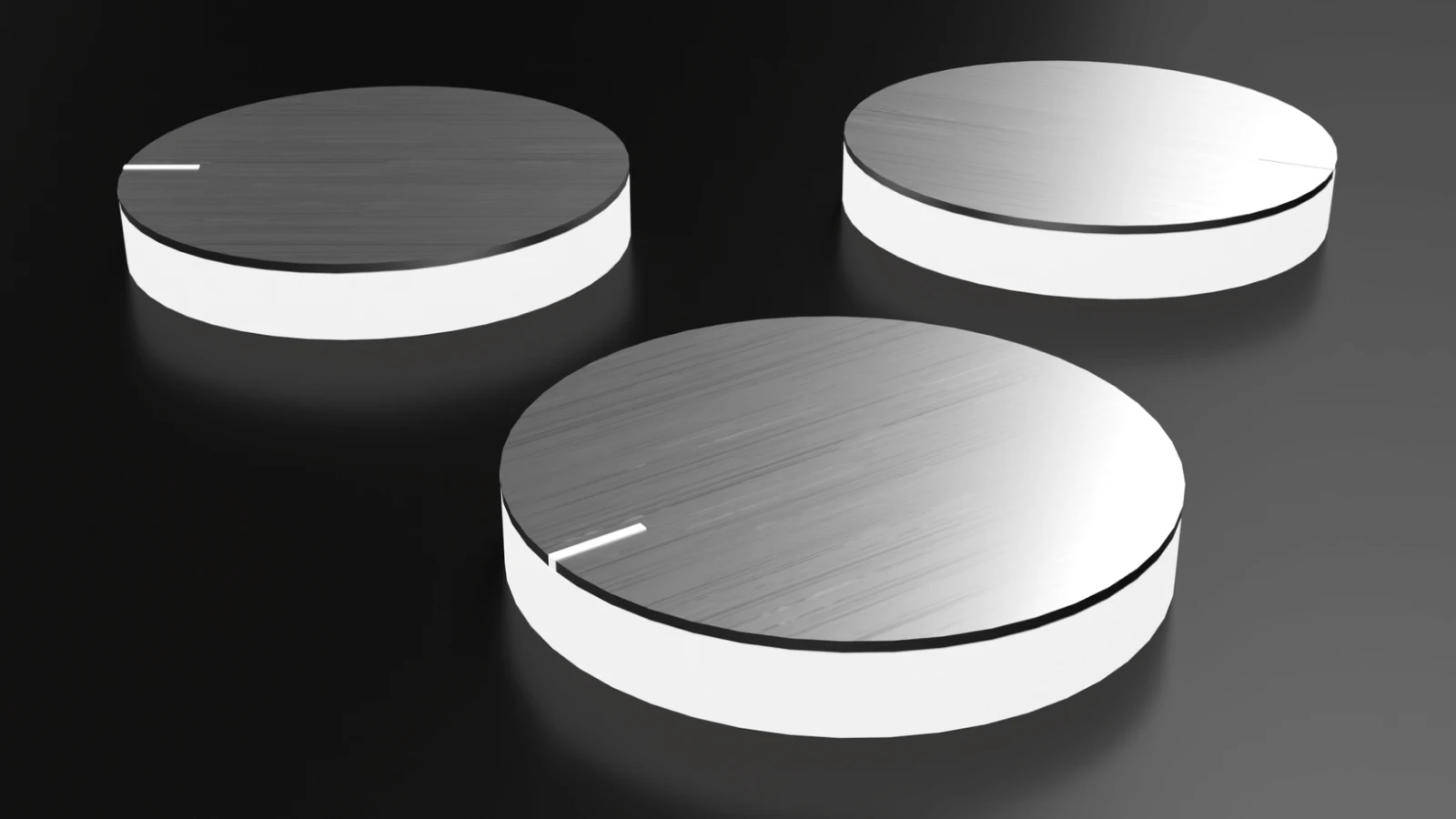
I pushed myself to design the physical elements too — a knob following the same neomorphic inspiration.
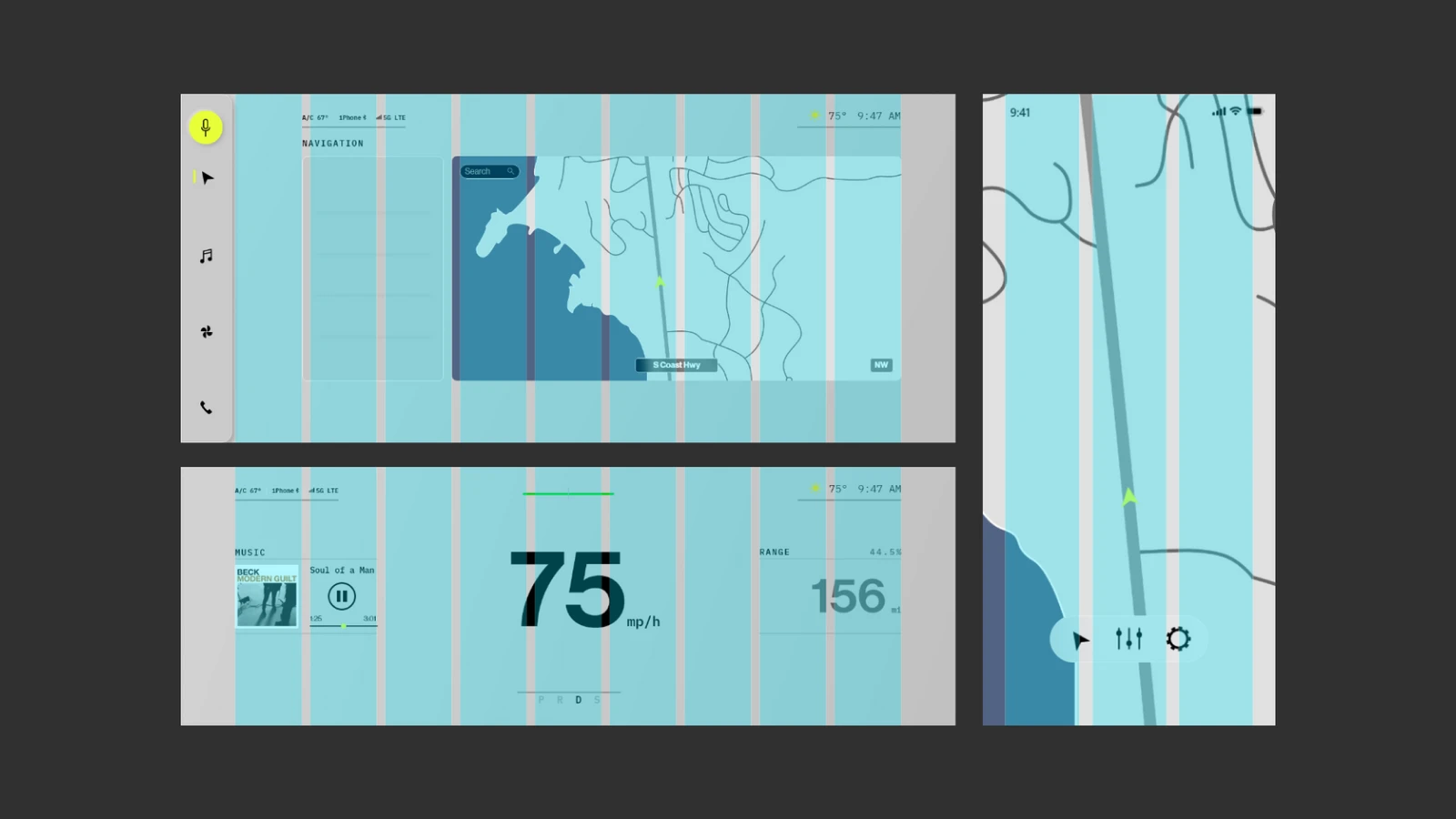
The layout grid underlying the interface.
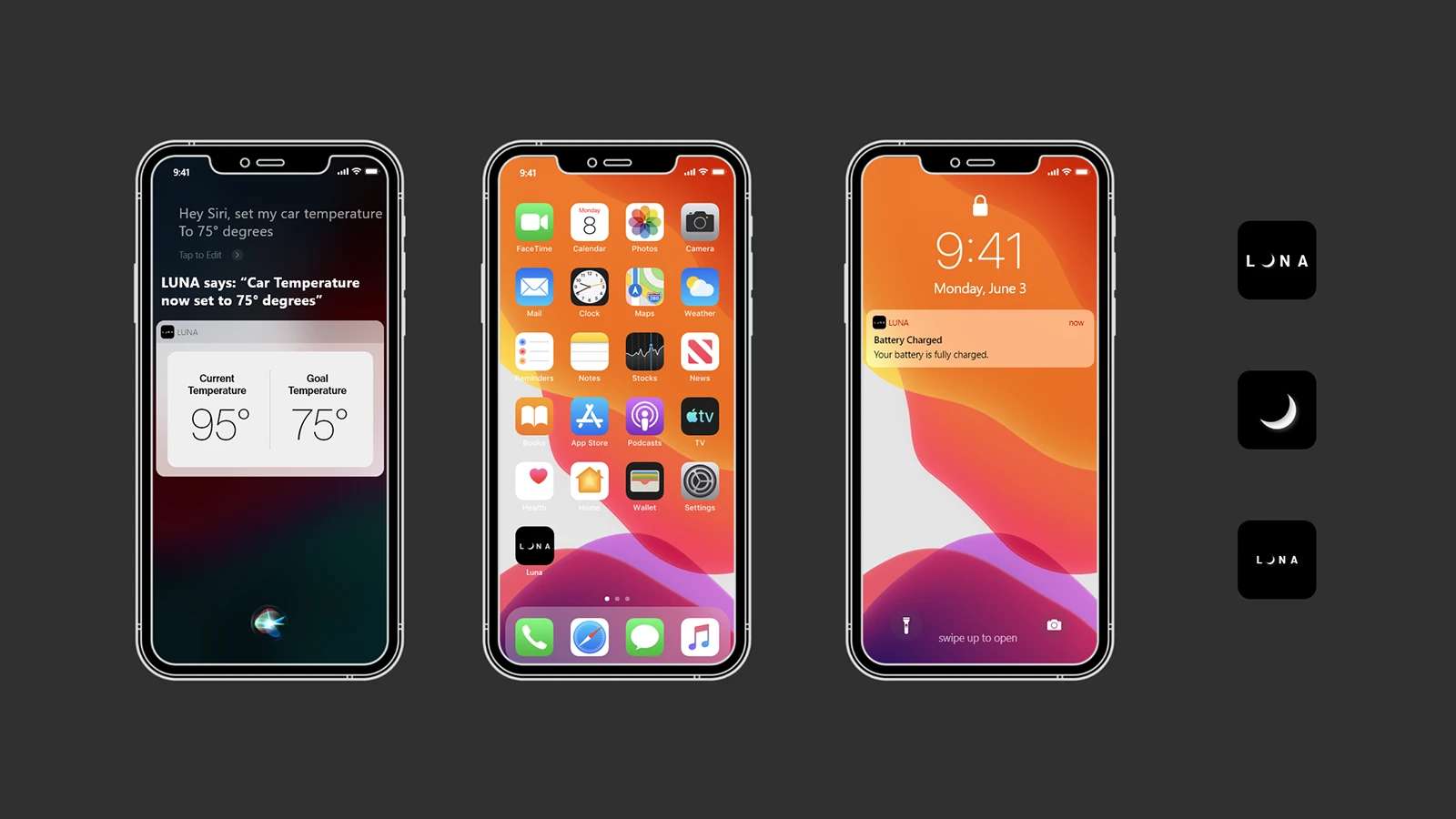
The companion app — using Apple's design elements to create branding mock-ups of the app icon and key screens.
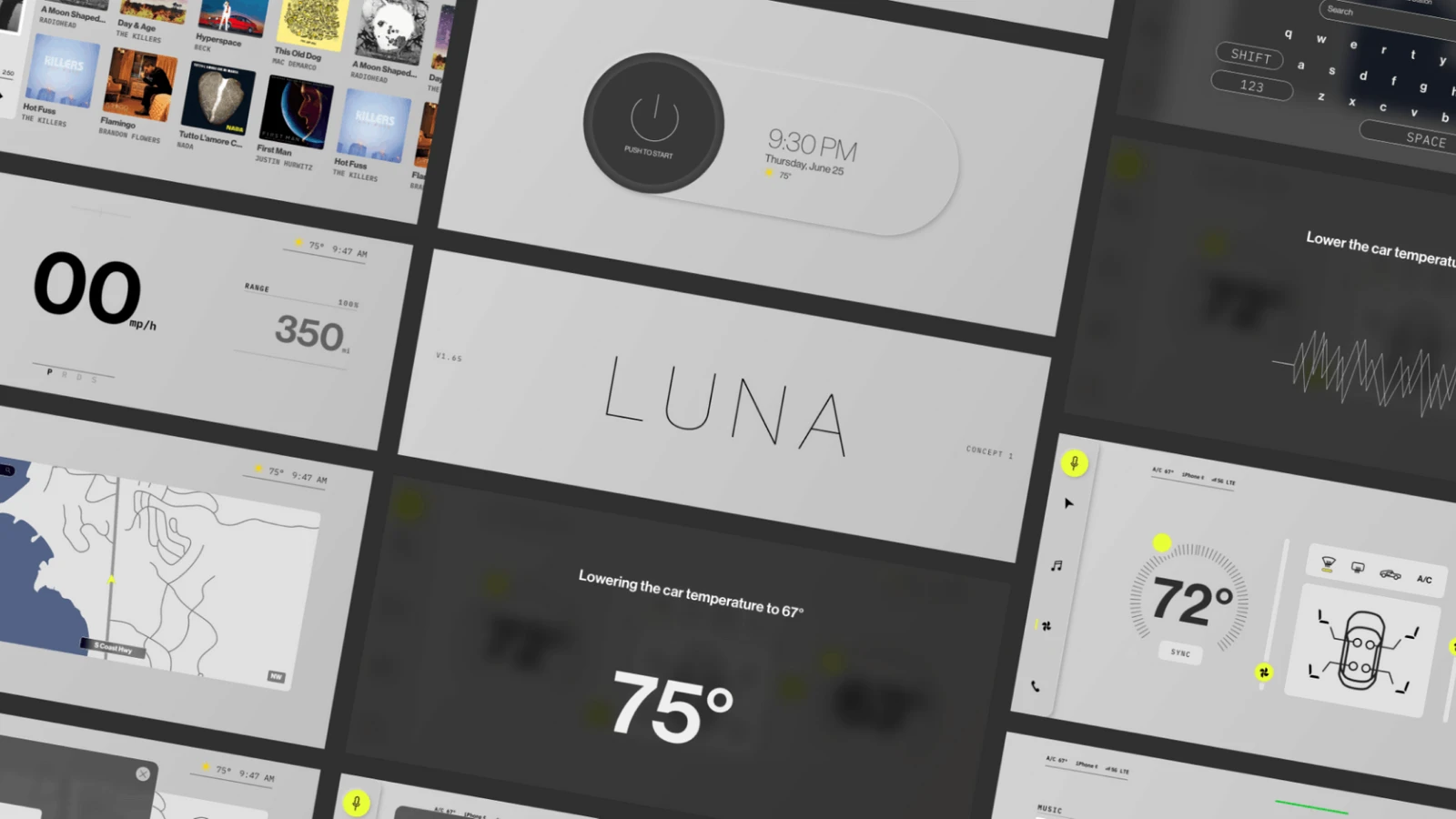
Final design — after two rounds of testing and a full pass on details and motion.
Things I made just to see if I could
I had a lot of fun creating things for this project. Some of these haven't been user tested or formally implemented — they're just things that could be part of the finished design.
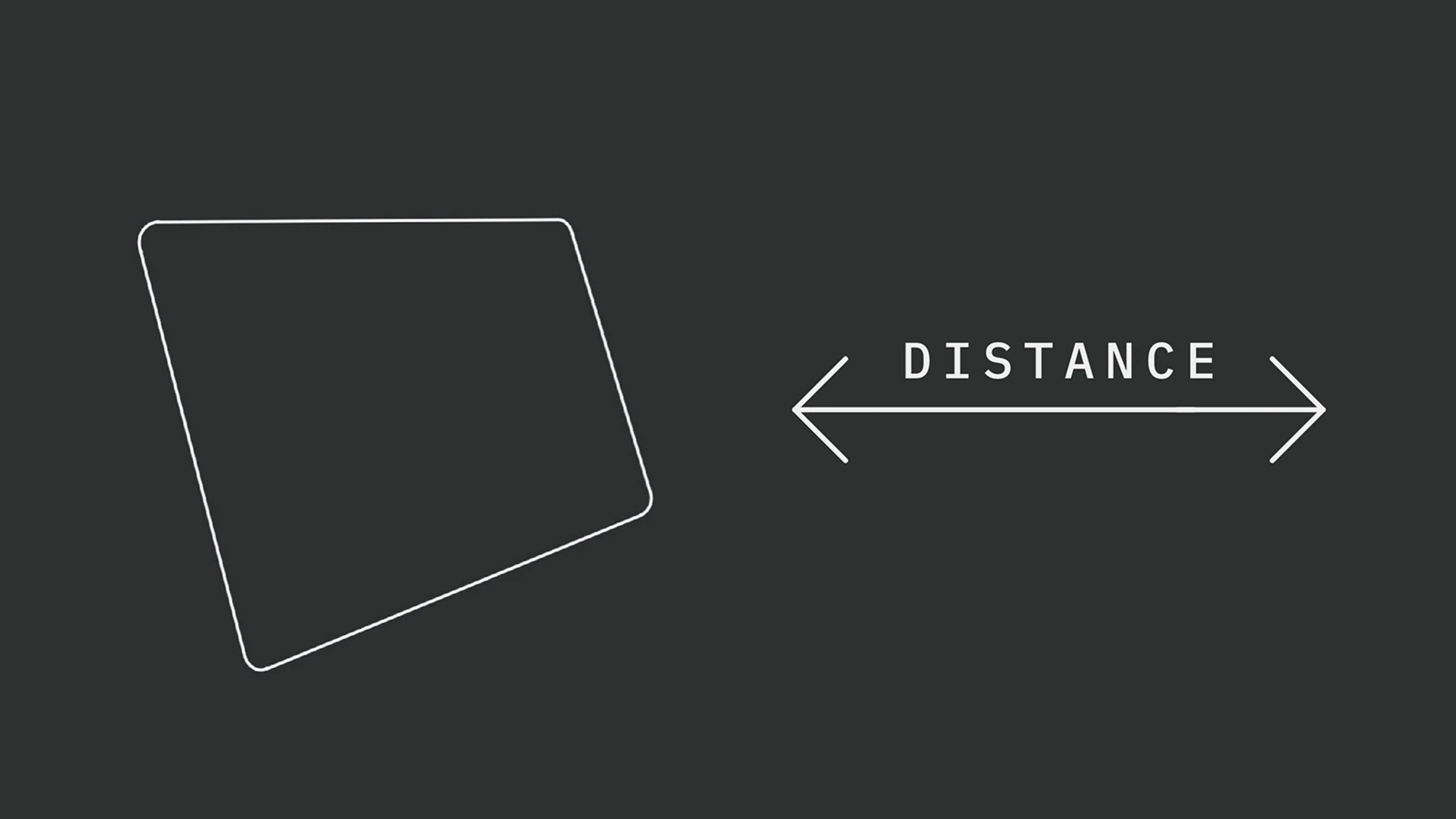
Proximity sensor concepts — what the interface could do when it knows a hand is nearby.
I also thought about hand gestures as a control method. The idea came from early attempts to add gestures to smartphones — the same concept could be useful in a car to let people control things without having to find a target on screen. And biometrics — face scanning, eye tracking, fingerprint readers — all have interesting potential in this context too.